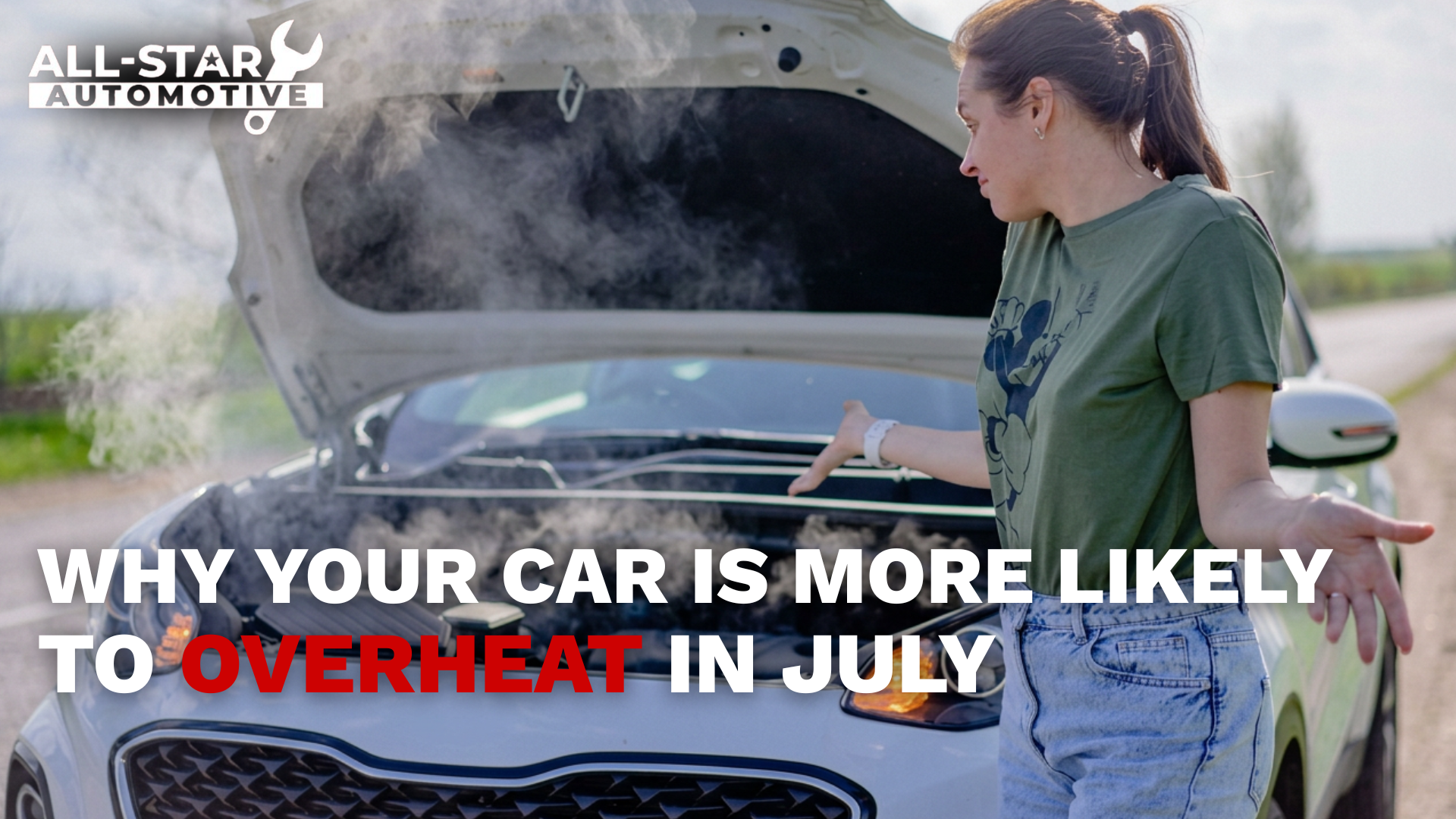
A temperature gauge climbing toward the red is one warning you cannot put off. An overheating engine can warp, crack, or seize in a matter of minutes, and the repair bill grows with every mile you keep driving. So what makes a car overheat in the first place? Here are six of the most common causes and what to do about each one.
1. Low or Leaking Coolant
Why it happens:
coolant, also called antifreeze, carries heat away from the engine. When the level drops because of a leak, the system cannot remove heat fast enough.
How to fix it:
- With the engine cool, check the coolant reservoir under the hood. If it is low, top it off with the coolant type your vehicle calls for.
- Look under the car for puddles. Green, orange, or pink fluid usually means a coolant leak.
- If you find yourself adding coolant regularly, there is a leak somewhere that needs to be found and repaired.
2. Failing Thermostat
Why it happens:
the thermostat is a valve that controls when coolant flows to the radiator. If it sticks closed, hot coolant stays trapped in the engine and the temperature climbs fast.
How to fix it:
- A stuck thermostat has to be replaced. If your engine overheats within a few minutes of starting, have it checked right away.
3. Radiator or Radiator Fan Problems
Why it happens:
the radiator releases heat from the coolant before it returns to the engine, and the fan pulls air through the radiator when the vehicle is moving slowly or sitting still. A damaged or clogged radiator, or a fan that does not run, leaves that heat with nowhere to go.
How to fix it:
- Look for leaks, bent fins, or debris blocking the front of the radiator.
- Confirm that the fan comes on once the engine is hot. If it does not, the fan motor, relay, or sensor may need to be replaced.
4. Worn or Broken Water Pump
Why it happens:
the water pump pushes coolant through the engine and radiator. When it fails, circulation stops and the engine overheats quickly.
How to fix it:
- A technician can check the pump for leaks, noise, and play in the bearing. A failing water pump needs to be replaced.
5. Clogged Cooling System
Why it happens:
over the years, rust, scale, and worn-out coolant build up inside the system and restrict the flow.
How to fix it:
- A
coolant flush
clears out the buildup and refills the system with fresh coolant.
6. Blown Head Gasket
Why it happens:
the head gasket seals the engine's combustion chambers. When it fails, coolant can leak into the cylinders or the oil, which leads to overheating and, if ignored, engine failure.
How to fix it:
- White smoke from the exhaust, bubbles in the coolant reservoir, or milky-looking oil are all signs of a blown head gasket. This is a major repair that calls for professional service.
What to Do If Your Car Overheats
If the gauge spikes or you see steam while you are driving:
- Pull over
as soon as it is safe and shut off the engine.
- Let the engine cool
before you open the hood, and never remove the radiator cap while the engine is hot.
- Check the coolant level
once everything has cooled down, if it is safe to do so.
- Call a shop you trust
if you are not sure what caused it.
Continuing to drive an overheating vehicle is the fastest way to turn a small repair into a new engine. If your car is running hot, bring it to
All-Star Automotive in Pleasant Valley
for a full diagnosis and
cooling system repair . Call
(816) 736-3332
or
contact us
to get started.